The Short Answer
Yes, you can fly with peptides and syringes. The TSA allows passengers to carry liquid medications and sterile syringes in their carry-on bags.
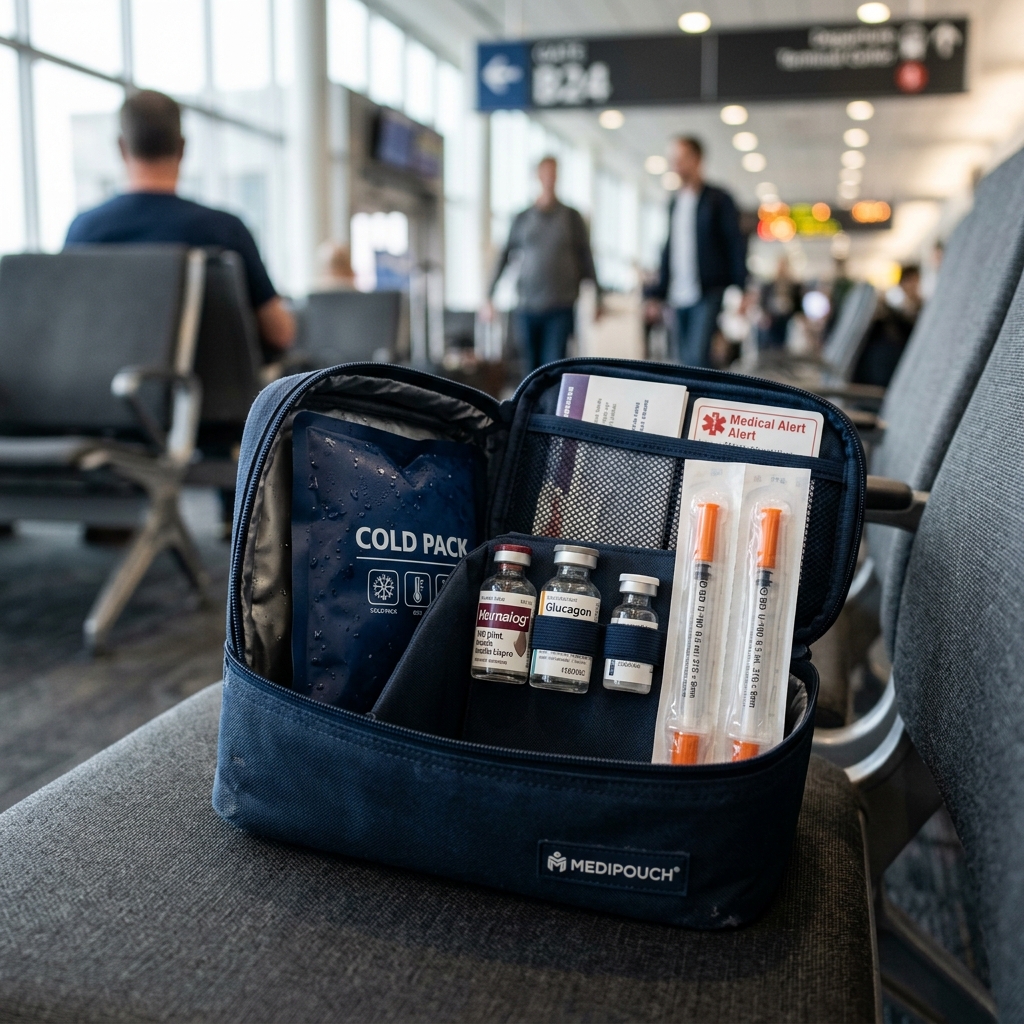
The best method: Buy a small "insulin travel cooler case" with a frozen gel pack from Amazon. Keep it in your carry-on luggage. If TSA pulls it for inspection, simply state that it is liquid medication. They are looking for explosives and weapons, not your BPC-157.
Navigating TSA and Airport Security
The biggest fear researchers have is that a TSA agent will confiscate their expensive peptides or interrogate them about the unlabelled vials. According to standard TSA regulations in the United States, passengers are permitted to bring medications (even liquid ones that exceed the standard 3.4oz rule) and the sterile syringes necessary to administer them.
Here are the rules of engagement for security checkpoints:
- Always use a Carry-On: Never put peptides in your checked luggage. The cargo hold experiences extreme temperature fluctuations, and checked bags are frequently lost.
- Declare it if asked: You do not need to proactively pull out your vials and wave them around. Just send your bag through the X-Ray. If the agent flags the bag (usually because the frozen gel pack looks dense on the scanner), simply say, "That is my personal medication and syringes that need to remain cold."
- Original Packaging: While a prescription label is ideal, it is rarely required. However, keeping the syringes in their sealed, original wrappers proves they are sterile medical equipment.
A Warning About International Travel
While flying domestically within the US is generally stress-free, international border control is entirely different. Different countries have vastly different classifications for peptides (some consider them scheduled substances). Unless you have a valid, translated doctor's prescription, it is highly recommended to leave your research compounds at home when traveling abroad to avoid customs seizures or legal trouble.
How to Keep Peptides Cold on a Flight
If your peptides are already reconstituted (mixed with bacteriostatic water), they need to be refrigerated to prevent degradation. But how do you survive a 6-hour flight plus airport delays?
The Insulin Travel Cooler
The absolute best investment you can make is an Insulin Travel Cooler Case (widely available online for under $20). These cases are specifically designed for diabetics to transport insulin—a fragile polypeptide that requires the exact same storage conditions as your research peptides.
These cases come with custom-fitted gel ice packs. Important tip: Ensure the gel pack is frozen completely solid before you leave for the airport. TSA considers frozen gel packs as a "solid" and permits them. If the pack is partially melted and "slushy," an overzealous agent might classify it as a liquid and confiscate it.
Don't Freeze the Vials!
A common mistake is placing the bare glass peptide vial directly against a freshly frozen ice pack. This can actually freeze the liquid inside the vial, which can permanently damage the peptide structure.
Make sure there is a layer of insulation (like the mesh netting inside the cooler case, or a small piece of cloth) between the frozen pack and the glass vial.
What if They Get Warm?
Let's say your flight is delayed, your ice pack melts, and your reconstituted peptides reach room temperature for 4 or 5 hours. Are they ruined?
Don't panic. While long-term refrigeration is necessary to maintain maximum efficacy for weeks or months, modern synthetic peptides do not instantly disintegrate the moment they hit room temperature. A few hours of warmth during transit will cause, at absolute worst, a microscopic loss in potency that you will not even notice.
Just put them back into a refrigerator as soon as you reach your hotel or destination.