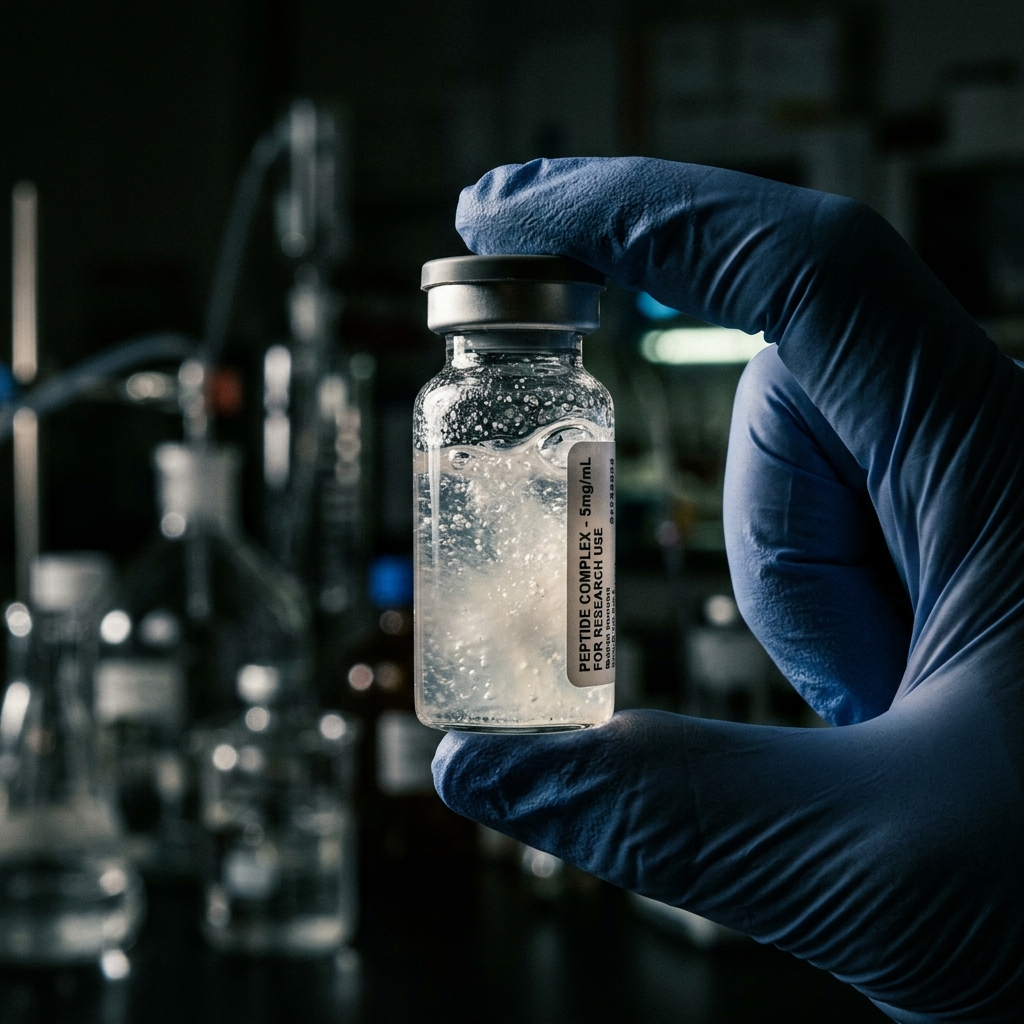
The Short Answer
No, you almost certainly did not ruin your peptide by shaking it. While gentle swirling is the recommended best practice, modern synthetic peptides are highly resilient molecules. Shaking simply introduces micro-bubbles and temporarily undissolved powder, causing cloudiness.
The Fix: Put the vial in the refrigerator and leave it completely undisturbed for 2 to 12 hours. In 99% of cases, the cloudiness will clear, the bubbles will rise, and the peptide will be perfectly viable.
The "Fragile Bond" Myth
If you spend enough time on Reddit or bodybuilding forums, you will inevitably read that peptides are as fragile as spun glass. You'll hear that you must drip the bacteriostatic water down the side of the glass so slowly that it takes five minutes, and that even a slight jostle will "shear the amino acid chains."
This is vastly overstated.
While proteins (like full-sized Human Growth Hormone or antibodies) have complex, delicate 3D folding structures that can be denatured by aggressive mechanical agitation, most research peptides (like BPC-157, Semaglutide, or Tirzepatide) are relatively short, simple chains of amino acids.
During the manufacturing and shipping process, these lyophilized (freeze-dried) powders are subjected to turbulence that far exceeds you shaking a vial for five seconds. The molecular bonds (peptide bonds) holding the amino acids together require extreme pH changes, digestive enzymes, or intense heat to break—not a vigorous shake of the wrist.
Why Is My Vial Cloudy?
If your peptide isn't ruined, why does it look like cloudy bathwater after you shake it? There are three main reasons:
1. Micro-Cavitation (Bubbles)
Shaking forces air into the bacteriostatic water, creating thousands of microscopic bubbles. Because the liquid in a tiny 3mL vial is highly concentrated, these bubbles take a long time to surface. This gives the illusion of a cloudy, ruined solution.
2. Incomplete Dissolution (The "Crash")
Peptides are hydrophilic, but they still need time to dissolve. If you shake a highly concentrated vial (e.g., a 15mg vial of Tirzepatide with only 1mL of water), the powder hasn't had time to fully integrate into the solvent. It becomes suspended in the liquid as a cloudy particulate.
3. Filler Reactions (Mannitol)
Most peptide "pucks" aren't just pure peptide; they contain a filler like Mannitol to give the powder bulk so you can actually see it in the vial. Mannitol can sometimes cause a temporary cloudy suspension when agitated rapidly.
How to Fix a Cloudy Vial
If you shook your vial, the solution is incredibly simple. Do nothing.
- Place the vial upright in your refrigerator.
- Ensure the temperature is stable (between 36°F and 46°F).
- Walk away for 2 to 12 hours.
Time is the best solvent. By letting the vial rest, the micro-bubbles will escape, and the undissolved peptide/filler suspension will slowly dissolve into a perfectly clear liquid.
When You SHOULD Worry
If you let the vial sit in the fridge for 24 hours and it remains heavily cloudy, milky white, or develops thick, gel-like floating chunks ("floaties"), do not inject it. This indicates a manufacturing error, severe pH imbalance, or bacterial contamination. Dispose of the vial immediately.
The Correct Reconstitution Technique
To avoid the panic of cloudiness entirely in the future, follow the standard clinical operating procedure for reconstitution:
- Angle the needle: Inject the bacteriostatic water so it hits the glass wall of the vial, sliding down gently onto the powder puck rather than blasting it directly.
- Let the vacuum work: Allow the negative pressure in the vial to pull the water in naturally.
- Swirl, don't shake: Hold the top of the vial between your thumb and index finger and make a gentle, slow circular motion (like swirling a glass of wine).
- Wait: If it doesn't dissolve immediately after 30 seconds of swirling, just put it in the fridge and wait.
Remember: Your research materials are robust, but treating them with clinical care ensures you never have to guess about their viability.