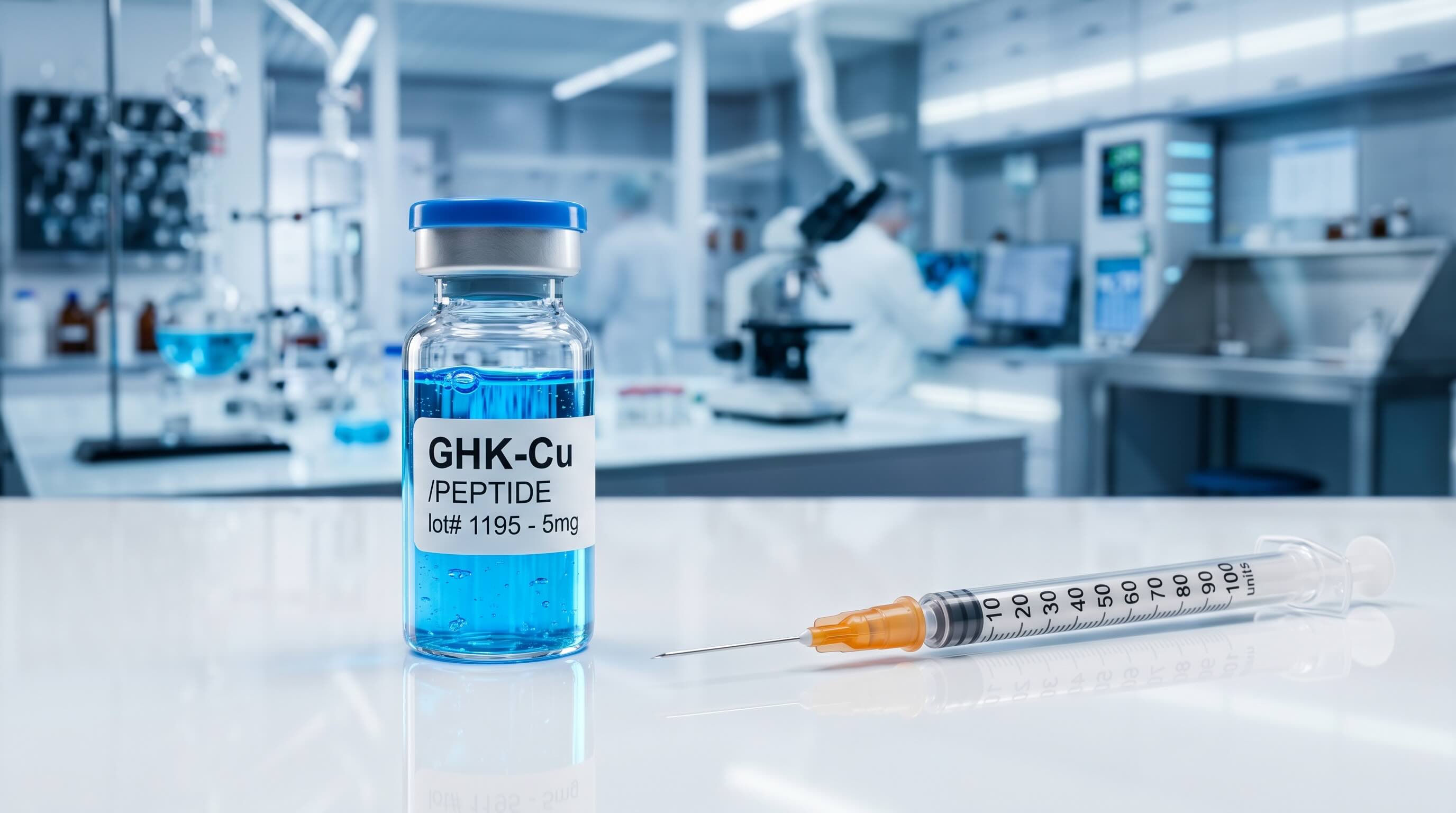
The Short Answer
Peptide injection site reactions (welts and itching) are usually caused by histamine release, acidic pH, or high peptide concentration (like GHK-Cu). To prevent them, inject into deeper subcutaneous fat (like the glutes or love handles), dilute the peptide further with more bacteriostatic water, rotate injection sites daily, and consider taking a non-drowsy antihistamine 30 minutes before your injection.
What Causes Peptide Injection Site Reactions?
It is incredibly common to develop an itchy, red bump or a raised welt after injecting certain peptides. In the research community, this is often referred to as PIP (Post-Injection Pain) or simply an Injection Site Reaction (ISR).
These reactions are rarely a sign of a severe allergic response or infection, but rather a localized inflammatory or histamine reaction to the compound itself. Some peptides are notorious for this—GHK-Cu is perhaps the most well-known offender due to its copper content and acidic pH when reconstituted.
The Three Main Culprits:
- Histamine Release: The physical trauma of the needle or the introduction of a foreign peptide sequence can trigger local mast cells to release histamine, causing immediate itching and swelling.
- Solution pH and Concentration: Highly concentrated solutions or those that alter the local pH of the subcutaneous tissue (again, common with copper peptides) will cause stinging and subsequent welt formation.
- Injection Depth: Injecting too shallow (intradermal rather than subcutaneous) traps the peptide just under the top layer of skin, leading to a much more pronounced welt that takes days to dissipate.
Actionable Steps to Prevent Welts and Itching
If you are struggling with post-injection redness and itching, you can drastically reduce or eliminate these reactions by adjusting your protocol.
1. Dilute the Peptide Further
If you reconstituted your peptide with a minimal amount of bacteriostatic water (e.g., 1mL for a 50mg vial), the resulting solution is highly concentrated. Adding more bacteriostatic water (e.g., moving to 2mL or 3mL) dilutes the peptide, buffering the pH and reducing the localized tissue irritation.
2. Change Your Injection Site
The skin on the abdomen is thin and dense with mast cells. Transitioning your injection site to areas with thicker subcutaneous fat deposits can make a massive difference. The upper glutes, the "love handles" (flanks), and the outer thighs tend to be much more forgiving and exhibit fewer inflammatory reactions.
3. Pre-dose with an Antihistamine
If the reaction is purely histamine-driven (it feels intensely itchy like a mosquito bite within 10 minutes of injection), taking a standard non-drowsy antihistamine (like Cetirizine or Loratadine) 30 to 60 minutes prior to administration often blocks the localized mast cell response entirely.
4. Ensure True Subcutaneous Depth
Make sure you are pinching a sufficient layer of fat and inserting the needle at a 45 to 90-degree angle to ensure the liquid is deposited deep into the subcutaneous fat layer, not just beneath the epidermis. Using a slightly longer needle (like a 5/16" or 1/2") can help if you are currently using very short 4mm tips.
When Should I Be Concerned?
Standard welts are annoying but harmless. They usually peak in itchiness around 12-24 hours and fade over a few days. However, you should consult a medical professional if the injection site becomes increasingly hot to the touch, red streaks spread from the site, or you develop a systemic fever, as these can be signs of an infection (cellulitis).