The Short Answer
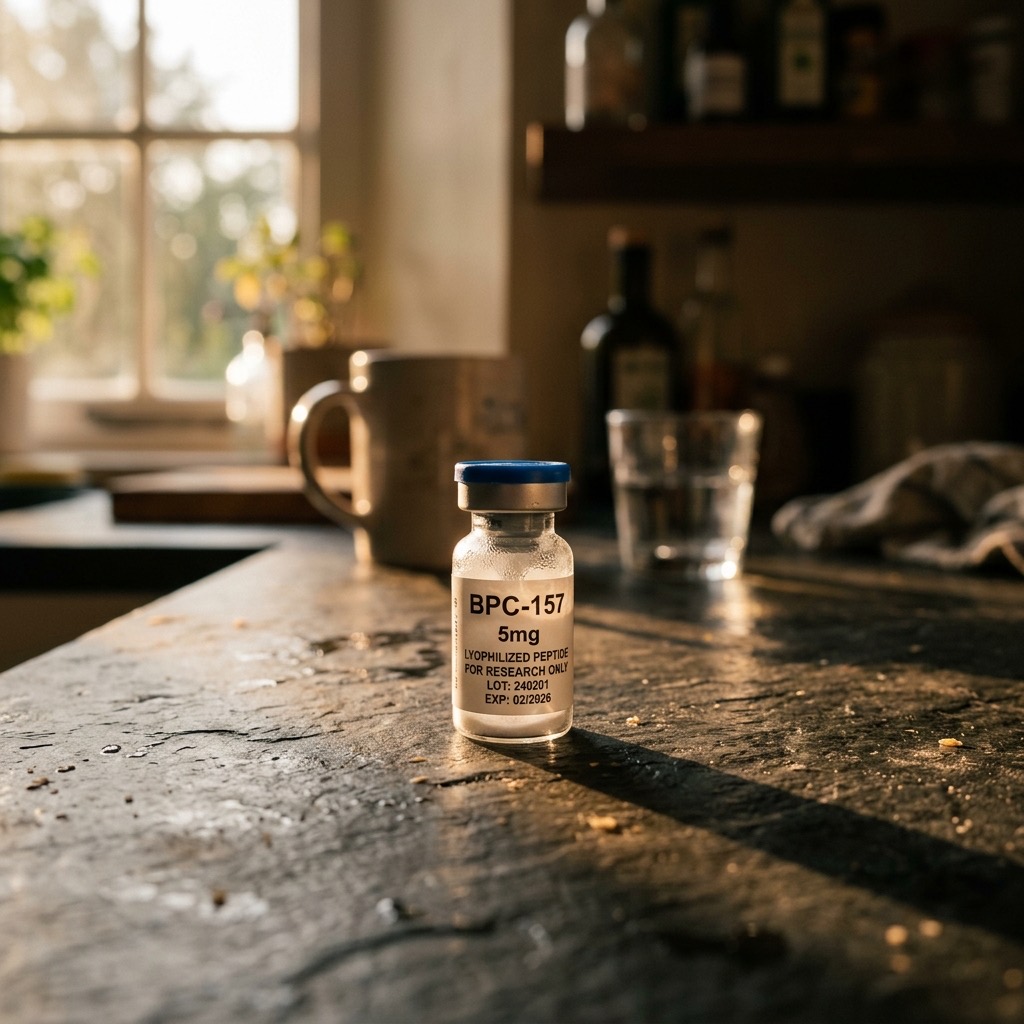
Don't panic. Leaving reconstituted peptides out at room temperature overnight will not ruin them. While refrigeration is ideal for long-term storage, an accidental 8-12 hour stint on the counter will cause virtually zero noticeable degradation. Simply put them back in the fridge as soon as you remember and continue your protocol as normal.
The Myth of Extreme Peptide Fragility
If you've spent any time reading about peptides online, you've probably encountered the idea that they are incredibly fragile. You're told never to shake the vial, and that they must be kept strictly at 2°C to 8°C (36°F to 46°F), or they will instantly break down into useless amino acid soup.
While it is absolutely true that peptides are delicate—especially once they are removed from their lyophilized (dry powder) state and mixed with bacteriostatic water—they aren't quite as delicate as a snowflake. Peptides are essentially short chains of amino acids, and the chemical bonds holding them together take more than a few hours at 70°F (21°C) to break apart.
What Happens When Peptides Hit Room Temperature?
When a reconstituted peptide is exposed to room temperature, the rate of degradation does indeed speed up. In a laboratory setting, cold temperatures are used to slow down the kinetic energy of molecules, which in turn slows down chemical reactions—including the natural breakdown of the peptide bonds.
However, this degradation process is a gradual curve, not a cliff. Studies and practical pharmacological compounding data suggest that most common research peptides (like BPC-157, TB-500, or GLP-1s) will lose a very small percentage of their potency when left at room temperature for 24 hours. For an overnight mistake of roughly 8 to 12 hours, the loss in efficacy is clinically insignificant.
The Real Danger: Heat and Light
Room temperature is generally fine for a short lapse. The real enemies of your reconstituted peptides are extreme heat and direct UV light.
- Direct Sunlight: UV light can rapidly degrade carbon bonds. If you left your vial on a windowsill bathed in direct, harsh sunlight all day, that is a much larger concern than just the temperature.
- Extreme Heat: If you left the vial in a hot car during the summer where temperatures exceed 100°F (38°C), the heat can denature the proteins much faster.
But if your vial was just sitting on a relatively cool, dark bathroom counter? You have nothing to worry about.
What About Bacterial Growth?
Another common concern is whether leaving the vial out will cause bacteria to grow. This is precisely why we use Bacteriostatic Water for reconstitution rather than sterile water.
Bacteriostatic water contains 0.9% benzyl alcohol. This alcohol acts as a preservative that actively prevents the growth of bacteria for up to 28 days (and often longer). The presence of this preservative means that an overnight stint at room temperature will not suddenly turn your vial into a petri dish.
Note: If you reconstituted with plain Sterile Water (which lacks a preservative), the risk of bacterial growth is significantly higher, and the vial should ideally be discarded if left out for a prolonged period.
Action Steps: What To Do Now
If you've just realized your mistake, follow these simple steps:
- Inspect the Vial: Look at the liquid. Is it still perfectly clear? If it has turned cloudy, murky, or has visible particles floating in it (precipitation), do not use it. If it’s clear, proceed.
- Put it Back in the Fridge: Immediately return the vial to the refrigerator.
- Don't Overthink It: Continue your research protocol as planned. You will not need to adjust your dosage to compensate for an imagined loss of potency.
Conclusion
Accidents happen. Leaving your peptides out overnight is a rite of passage for almost every researcher. Take a deep breath, put the vial back in the cold, and rest easy knowing your research materials are still fully viable.