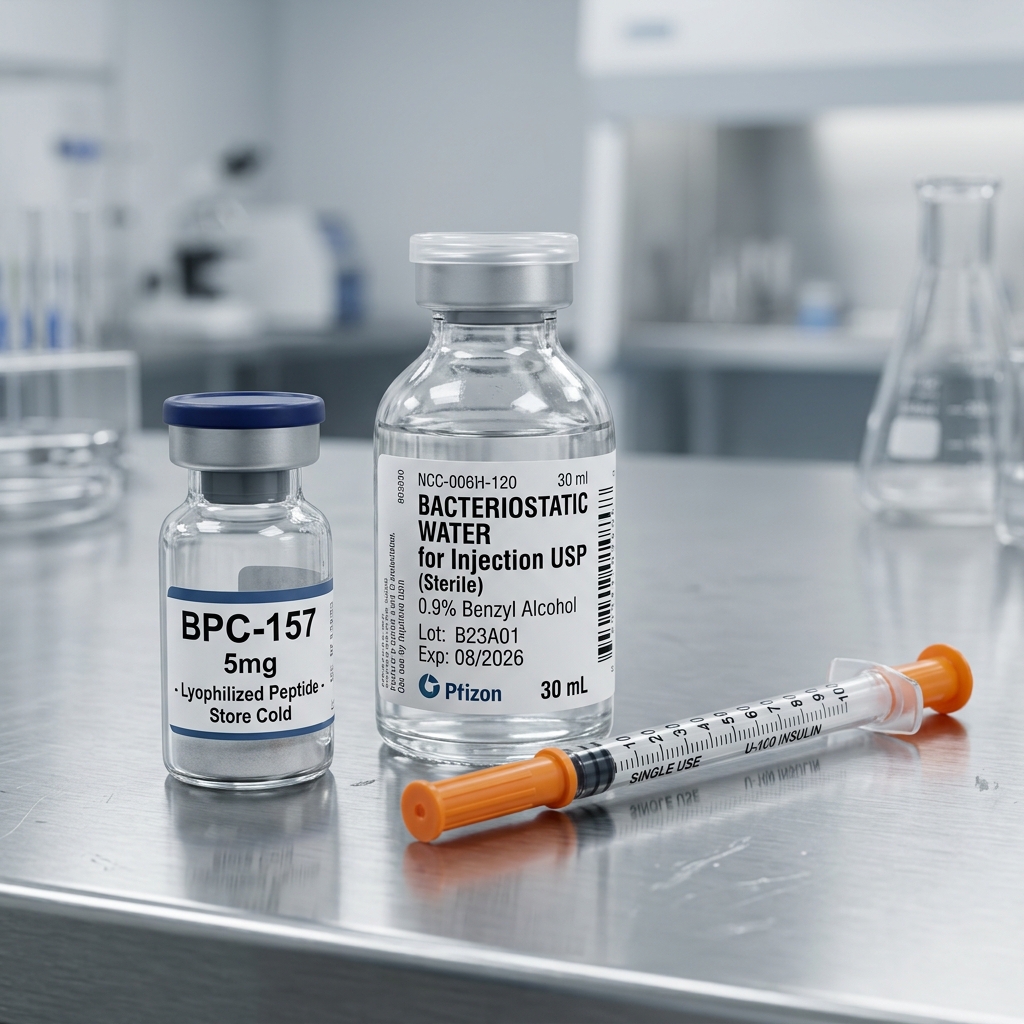
The Short Answer
There is no mandatory amount of water. Adding 1mL, 2mL, or 3mL of bacteriostatic water will not change the total amount of peptide in the vial (it's still 5mg).
The water simply dilutes the powder. You add water to make the math easier for your syringe. Generally, researchers add 1mL or 2mL to a standard vial, but the choice is entirely yours based on your desired dose.
Understanding the "Variable Volume" Concept
Many beginners stare at their lyophilized (powder) peptide and worry that adding the "wrong" amount of Bacteriostatic (BAC) water will ruin the compound. This is a misconception.
Think of the peptide powder like instant coffee. If you put 5 grams of instant coffee into a cup, it contains 5 grams of caffeine-rich powder. Whether you add 1 cup of water (a strong espresso) or 3 cups of water (a weak Americano), you still consume exactly 5 grams of coffee if you drink the whole thing.
The same applies to peptides. If you have a 10mg vial of Semaglutide, adding 1mL of BAC water creates a highly concentrated liquid. Adding 3mL creates a more diluted liquid. But the vial still contains exactly 10mg. The only thing that changes is how many units on your syringe you need to pull to get your specific dose.
How to Choose the Right Amount of Water
Since you control the amount of water, you should choose a volume that makes your syringe measurement easy to read. You don't want to pull a microscopic "1.2 units" (too hard to measure), nor do you want to pull a massive "80 units" (too much liquid to inject comfortably).
1Rule of Thumb: Target a "10 to 30 Unit" Pull
For most daily or weekly research protocols, injecting between 10 units (0.1mL) and 30 units (0.3mL) is considered optimal. It's easy to read on a U-100 syringe and comfortable to administer. You reverse-engineer your water amount to hit this target.
Example Scenario: Reconstituting BPC-157
Let's say you have a 5mg vial of BPC-157. Your research protocol calls for a 250mcg dose per administration.
First, convert milligrams (mg) to micrograms (mcg):
Now, let's see what happens if we add different amounts of BAC water:
| If you add this much BAC Water: | Total Volume in Syringe Units | To get 250mcg, you must pull: | Verdict |
|---|---|---|---|
| 1mL | 100 units | 5 units | Too small (hard to read on syringe) |
| 2mL | 200 units | 10 units | Perfect (easy to read, small injection) |
| 3mL | 300 units | 15 units | Also Perfect |
As you can see, by choosing to add 2mL of BAC water, you create a concentration where 10 units on the syringe perfectly equals your 250mcg dose. If you had chosen 1mL, you would have to carefully draw exactly 5 units, which is prone to parallax error on standard syringes.
Physical Vial Limitations
While the math allows you to add any amount of water, physical reality imposes a limit. Most standard peptide vials (the glass containers) have a maximum capacity of about 3mL.
If your math tells you to add 4mL or 5mL of water to make the dose easier to read, it won't physically fit in the vial. In these cases, you are forced to use less water (e.g., 2mL) and accept a smaller, more concentrated syringe pull.
Conclusion: Stop Guessing, Start Calculating
The next time you are faced with a new peptide vial, don't ask "How much water do I need to add?" Instead, ask yourself: "How many units do I want to inject?"
Once you know the dose you want, use our Universal Peptide Calculator. You can play with the "Quantity of Water" slider until the resulting "Syringe Pull" lands on a clean, easy-to-read number like 10 or 20 units. That is the exact amount of water you should add.