The Short Answer
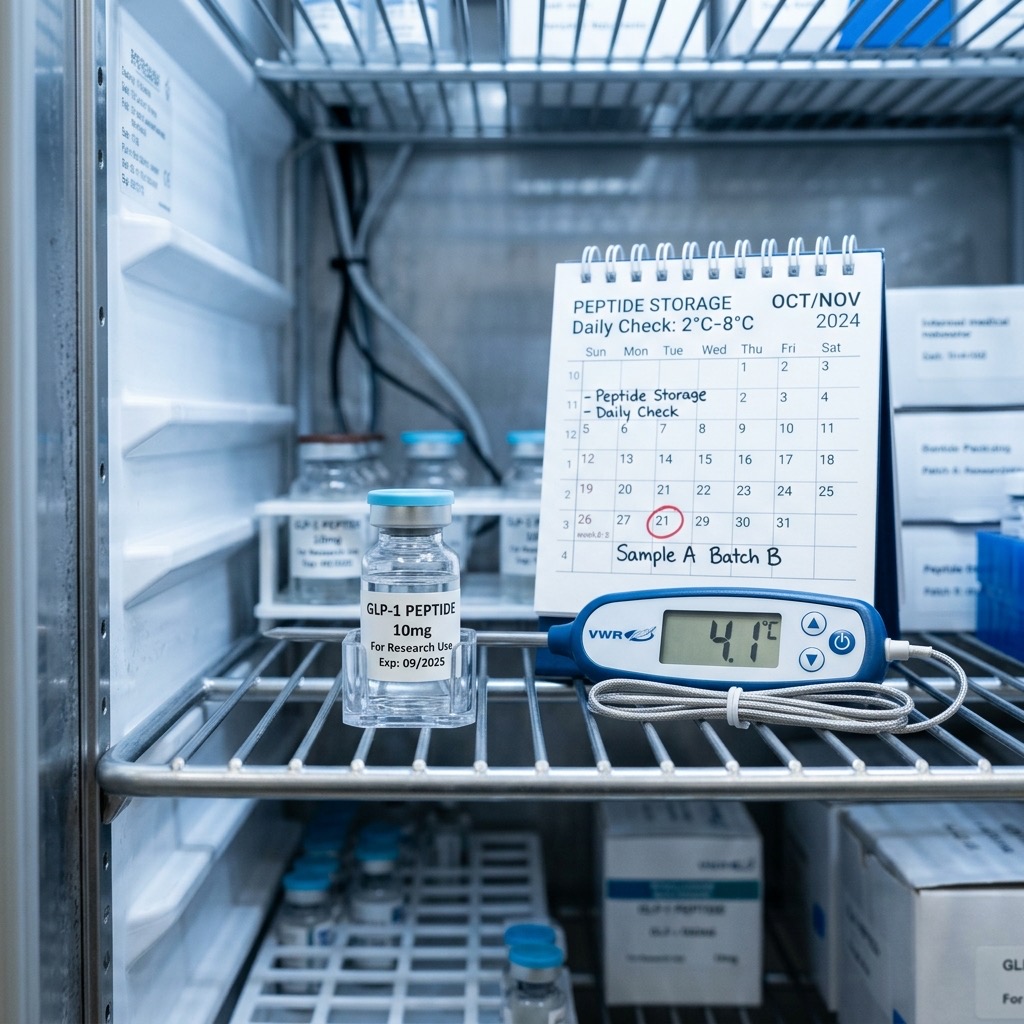
When properly reconstituted with bacteriostatic water and stored continuously in a refrigerator (36°F to 46°F), most peptides remain highly stable and effective for 3 to 4 weeks (21 to 28 days). After this timeframe, they do not suddenly become toxic, but they slowly lose their potency and begin to degrade via hydrolysis and oxidation.
Understanding Peptide Degradation Timelines
Unlike lyophilized (freeze-dried) powder which can last years in a freezer, adding water to a peptide introduces an environment where amino acid bonds can begin breaking down. This breakdown happens primarily through hydrolysis and deamidation.
- Days 1-14: Peak stability. At this stage, assuming the vial was not vigorously shaken and remains cold, the peptide structure is almost entirely preserved.
- Days 14-28: Gradual decline. You may start losing a small percentage of potency, though the compound remains effective for research purposes.
- Beyond 28 Days: Accelerated degradation. While still not harmful, the efficacy of the peptide will significantly diminish, and bacterial risk begins to increase if the benzyl alcohol in the bacteriostatic water is compromised.
Factors That Accelerate Degradation
If your peptides aren't lasting the full 4 weeks, one of these environmental variables might be to blame:
- Temperature Fluctuations: Keeping vials in the door of the fridge exposes them to warm air every time the door opens. Always store vials in the back of the refrigerator.
- Light Exposure: UV light degrades amino acid bonds rapidly. Keep vials in their boxes or use amber/dark-tinted vials when possible.
- Using the Wrong Diluent: Reconstituting with plain sterile water instead of 0.9% benzyl alcohol bacteriostatic water reduces the safe usage window to just 24-48 hours due to bacterial growth risks.
Can You Freeze Mixed Peptides to Extend Shelf Life?
Absolutely not. While unmixed lyophilized powder should be stored in the freezer, placing a reconstituted liquid peptide into a freezer will destroy it. The expansion of water crystals during the freezing process acts like microscopic knives, instantly shearing the delicate peptide bonds and rendering the solution useless.